
Used RV pricing feels mysterious because there is no single official book everyone trusts, the way cars have. The good news: you do not need one. You need two things, a rough sense of how RVs lose value, and a way to see what comparable units are listed for today.
Three prices, not one number
Before you judge any listing, separate three things that are easy to confuse:
- Active asking prices are what sellers advertise right now. They are easy to find, but they run above what units finally sell for, because an asking price has negotiating room built in.
- Verified transaction prices are what buyers actually paid. They are the truest signal, but hard to see: there is no public, VIN-level sold-price feed for RVs the way there is for some car data.
- Estimated market value is the working number you actually use: an inference built from active comps, then adjusted for condition, age, miles, and how motivated the seller is. It is an estimate, not a quote.
Most tools you will find, ours included, are built on active asking prices, because that is the data that exists in real time. That is genuinely useful for spotting an overpriced unit, as long as you remember you are reading asking prices and set your target below them.
How RV depreciation works
Figures vary by type, brand, and condition, and much of the public data is dealer or marketing content, so treat these as rough guides rather than valuation:
- Year one is the steepest drop, commonly cited around 20 percent off the original price.
- By five years, estimates generally land somewhere in the 30 to 45 percent loss range, with towables and Class C motorhomes often holding a bit better than high-end Class A coaches.
- After five years, depreciation slows to a few percent a year, which is why a well-kept older unit can be a genuinely smart buy.
The practical takeaway: the hardest financial hit happens before you would ever buy used, so a clean, well-maintained two-to-five-year-old RV often sits in the value sweet spot.
What drives a used RV's value
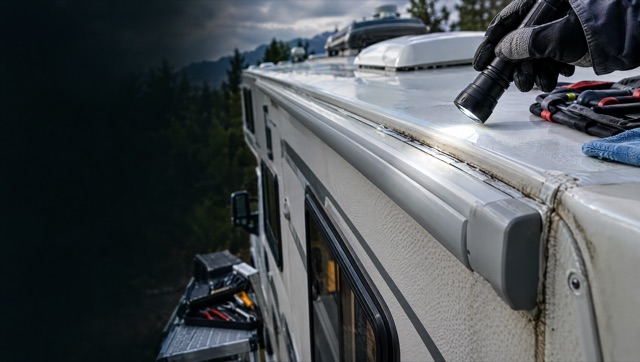
Beyond age, the big levers are condition and maintenance history, mileage or hours on a motorhome, brand and build tier, floorplan desirability, and any sign of water intrusion, which is the one problem that can gut a unit's value. We cover that risk in RV roof leaks. Two same-year units can be worth thousands apart based on how they were stored and cared for.
Instead of guessing, compare the unit against similar active listings. Our live deal check tool pulls current active listings for a year, make, and model, shows the median and the typical range, and scores where an asking price sits. It reflects what sellers are asking right now, your best real-time read on estimated market value, not a stale book figure. Just remember those are asking prices, and final sale prices usually land a bit lower.
Private seller vs. dealer
A private sale usually carries a lower price but no warranty and no recourse, so the inspection matters even more. A dealer used unit costs more but may include some coverage and reconditioning, along with the same fee sheet you would see on a new purchase. Either way, price is only fair relative to condition, which is why a pre-purchase inspection is the best money you will spend.
The next step
Have a used unit in mind? Check the asking price against the live market first, then get it inspected before you commit. If you want a second opinion on whether the number is fair, send us the listing and we will take a look.